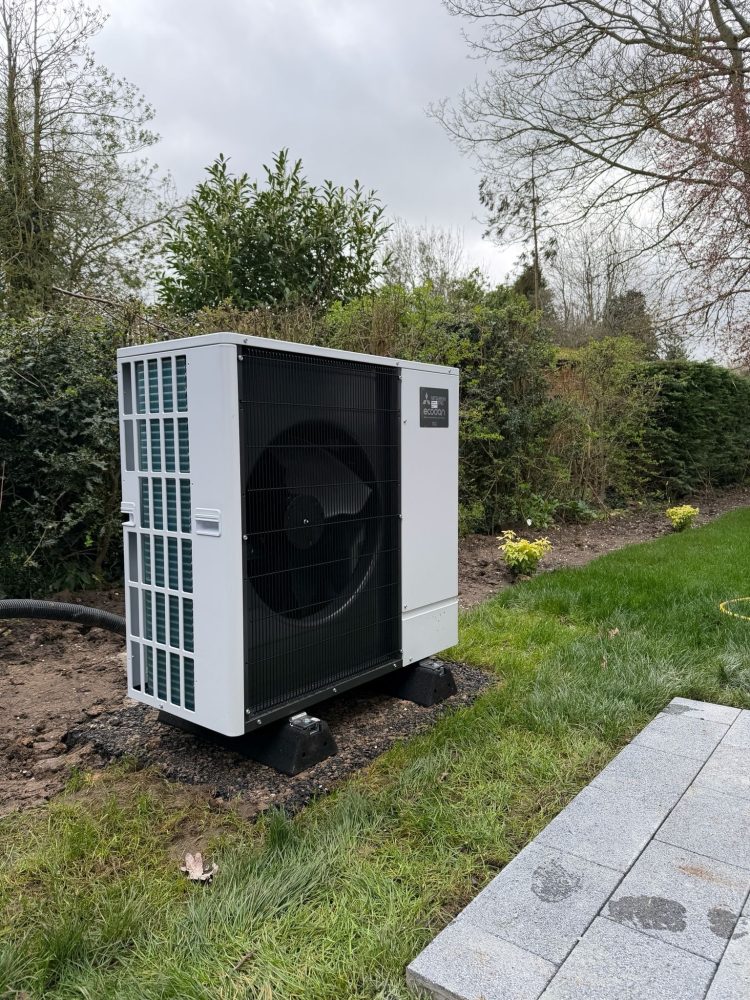
Yes, you should get a heat loss survey before installing a heat pump because it helps confirm how much heat your property needs and whether the system can be designed properly. For homes and properties across Horley, Reigate, Redhill, Crawley, Surrey, and West Sussex, this is one of the most important checks before deciding whether a heat pump is suitable.
This guide explains why a heat loss survey matters, what it involves, how it affects heat pump design, and what can go wrong if it is missed.
We’ll cover:
- What a heat loss survey is
- Why it matters before installing a heat pump
- How heat pumps work differently from boilers
- What the survey involves
- What information you may need to provide
- How insulation and draughts affect heat pump performance
- Whether older homes can have heat pumps
- How a heat loss survey affects radiator sizing
- How it relates to EPCs and energy performance
- Common mistakes to avoid
- What happens after the survey
- How JPEC Building Services can help
What is a heat loss survey?
A heat loss survey is an assessment that shows how much heat your property loses through the walls, roof, floors, windows, doors, ventilation, and draughts. In plain English, it helps calculate how much heat your home needs to stay warm.
This matters because every property loses heat differently. A modern well-insulated home in Horley may need much less heat than an older solid-wall house in Reigate or Redhill.
A heat loss survey may include room measurements, building fabric checks, insulation details, window and door information, heating system information, and sometimes thermal imaging. Thermal imaging uses a specialist camera to show surface temperature differences, which can help identify cold spots, draughts, or missing insulation.
JPEC Building Services can carry out heat loss surveys and explain the results clearly, without overcomplicating the process.
Why does a heat loss survey matter before installing a heat pump?
A heat loss survey matters because a heat pump must be sized and designed around the property’s actual heating needs. If the heat demand is misunderstood, the system may not perform as expected.
A heat pump that is too small may struggle to keep the property warm in colder weather. A heat pump that is too large may cost more than needed and may not operate as efficiently as it should.
The survey helps identify how much heat each room needs, not just the whole property. This is important because a living room, bedroom, hallway, extension, or loft conversion may all lose heat at different rates.
For homeowners in Surrey and West Sussex, a heat loss survey can help avoid guesswork before committing to a major heating upgrade.
How do heat pumps work differently from boilers?
Heat pumps usually work best when they provide steady, lower-temperature heat over longer periods. This is different from many gas or oil boilers, which often produce hotter water and can heat radiators quickly.
This difference matters because your existing heating system may not automatically be suitable for a heat pump.
A boiler can sometimes compensate for a poorly insulated room by sending very hot water to the radiators. A heat pump is usually designed to work more efficiently at lower flow temperatures. Flow temperature means the temperature of the water leaving the heating system and going into your radiators or underfloor heating.
What this means for you is simple: if your home loses a lot of heat, or if the radiators are too small, the heat pump may need to work harder. That can affect comfort and running costs.
What does the heat loss survey involve?
A heat loss survey usually involves a careful review of the property, room by room. The assessor records details that affect how quickly each space loses heat.
The survey may look at:
- room sizes and ceiling heights
- wall, floor, and roof construction
- insulation levels
- window and door types
- draughts and ventilation
- radiator sizes
- existing heating controls
- extensions, loft conversions, or older building sections
- comfort issues, such as rooms that are always cold
The assessment is usually non-invasive. That means the assessor normally checks visible details, takes measurements, asks questions, and uses available evidence rather than opening up walls or floors.
For a property in Crawley, this might be a relatively straightforward survey of a modern home. For an older or extended property in Redhill or Reigate, it may need more care because different parts of the building may have different construction types.
What information will you need to provide?
You do not need to have every document ready, but useful information can help make the heat loss survey more accurate. If insulation or previous upgrades can be evidenced, they can usually be considered more confidently.
Helpful information may include:
- floor plans, if available
- details of wall, roof, or floor insulation
- window and door installation information
- boiler or heating system details
- radiator sizes, if known
- previous EPCs
- extension or conversion details
- areas of the home that feel cold or draughty
EPC stands for Energy Performance Certificate. It gives a property an energy efficiency rating and recommendations for improvement.
If you do not have this information, the survey can still go ahead. The assessor may need to make reasonable assumptions based on what can be seen and measured.
JPEC Building Services can advise what is useful before the visit and what can be checked during the assessment.
How do insulation and draughts affect heat pump performance?
Insulation and draughts affect heat pump performance because they influence how much heat the building needs. A better-insulated, less draughty home usually needs less heat to stay comfortable.
This does not mean every property must be perfect before a heat pump can be considered. However, it does mean the building should be understood properly.
For example, a home with thin loft insulation, draughty doors, and older windows may need more heat than expected. A heat loss survey can help identify whether simple fabric improvements should be considered before or alongside a heat pump.
Building fabric means the physical parts of the property, such as the walls, roof, floors, windows, doors, and insulation.
Improving building fabric may help reduce heat demand, support comfort, and make the heating design easier. Any recommendations should still be confirmed through a proper assessment for the individual property.
Can older homes have heat pumps?
Yes, older homes can sometimes have heat pumps, but they need proper assessment and design. Age alone does not decide whether a heat pump is suitable.
Older homes in Reigate, Redhill, and parts of Surrey may have solid walls, suspended timber floors, older extensions, chimneys, draughts, or mixed construction. These features can affect heat loss and heating design.
A rural or semi-rural property in West Sussex may also have larger rooms, exposed positions, or different heating demands. That does not automatically rule out a heat pump, but it does mean assumptions are risky.
A heat loss survey helps show whether the property is likely to need insulation upgrades, radiator changes, improved controls, or a different heating strategy before a heat pump is installed.
JPEC Building Services can help explain these trade-offs in plain English so you can make a more informed decision.
How does a heat loss survey affect radiator sizing?
A heat loss survey helps show whether your existing radiators are large enough to heat each room with a heat pump. This is important because heat pumps often work with lower water temperatures than traditional boilers.
If the water going through the radiators is cooler, the radiators may need to be larger to provide enough heat. Some rooms may be fine as they are, while others may need larger radiators, additional emitters, or underfloor heating.
Emitter is a general term for something that gives heat into a room, such as a radiator or underfloor heating.
Without a room-by-room heat loss calculation, radiator sizing can become guesswork. That can lead to rooms that feel cold, systems that run inefficiently, or unnecessary upgrades where they are not actually needed.
A careful survey helps match the heating design to the building.
How does a heat loss survey relate to an EPC?
A heat loss survey and an EPC are useful in different ways. An EPC gives an overall energy rating, while a heat loss survey gives more practical detail about how much heat the property needs.
An EPC can help identify general recommendations, such as insulation or heating improvements. However, it is not a full heat pump design and should not be treated as one.
A heat loss survey is more specific because it looks at the heat demand of the building, often room by room. This is the kind of information needed when planning a heat pump system.
For landlords, developers, and homeowners across Horley, Crawley, Surrey, and West Sussex, the two assessments can work together. An EPC may help with compliance and energy performance planning, while a heat loss survey can support heating design and comfort.
What can go wrong without a heat loss survey?
Without a heat loss survey, the heat pump may be based on assumptions rather than evidence. That can lead to poor comfort, poor efficiency, higher costs, or unnecessary disruption.
Common problems include:
- the heat pump being too small
- the heat pump being too large
- rooms not reaching comfortable temperatures
- radiators being incorrectly sized
- insulation problems being missed
- running costs being higher than expected
- the system needing changes after installation
- customers losing confidence in the technology
Many heat pump problems are not caused by the technology itself. They are caused by poor assessment, poor design, or misunderstanding the building.
A proper heat loss survey is designed to reduce those risks before installation begins.
What happens after the heat loss survey?
After the heat loss survey, the findings should help guide the next stage of design and decision-making. You should have a clearer understanding of the property’s heat demand and any issues that may need attention.
The survey may show that the property is suitable to move forward with heat pump design. It may also show that certain improvements should be considered first, such as loft insulation, draught reduction, radiator upgrades, heating controls, or further investigation.
In some cases, the result may show that a heat pump is possible but only with careful design. In other cases, it may highlight that another approach should be considered before committing.
JPEC Building Services can support this process by explaining likely performance, practical next steps, and any trade-offs clearly.
When should you get professional advice?
You should get professional advice before committing to a heat pump, especially if your property is older, extended, poorly insulated, difficult to heat, or has mixed building types. The earlier you get advice, the easier it is to avoid expensive mistakes.
A professional assessment is especially useful if:
- your home has cold rooms
- your heating bills are high
- the property has solid walls
- you have older windows or doors
- you are planning insulation upgrades
- you are replacing a boiler
- you are considering solar panels or battery storage as well
- you are a landlord planning future compliance improvements
JPEC Building Services are experienced local building compliance, energy performance, surveying, and sustainability specialists. They can assess, survey, calculate, report, advise, and support clients properly across Horley, Reigate, Redhill, Crawley, Surrey, West Sussex, and surrounding areas.
JPEC Building Services can help
JPEC Building Services are experienced local building compliance, energy performance, surveying, and sustainability specialists supporting homeowners, landlords, developers, commercial clients, and business owners across Horley, Reigate, Redhill, Crawley, Surrey, West Sussex, and surrounding areas.
They can help assess, survey, calculate, report, advise, and support you properly, whether you need a heat loss survey, EPC survey, condition report, roof survey for solar suitability, sustainability report, decarbonisation report, SAP calculation, Predicted Energy Assessment, or wider compliance support before installing a heat pump.
As part of the wider JPEC Group, JPEC Building Services can help connect assessment, compliance, design, and delivery where appropriate. The aim is to explain trade-offs, building suitability, energy performance, likely heating performance, compliance requirements, and practical next steps in plain English.
This article is general information only and is not personal advice. Recommendations should always be confirmed through a proper survey, inspection, assessment, calculation, or system design for the individual property and requirements.